
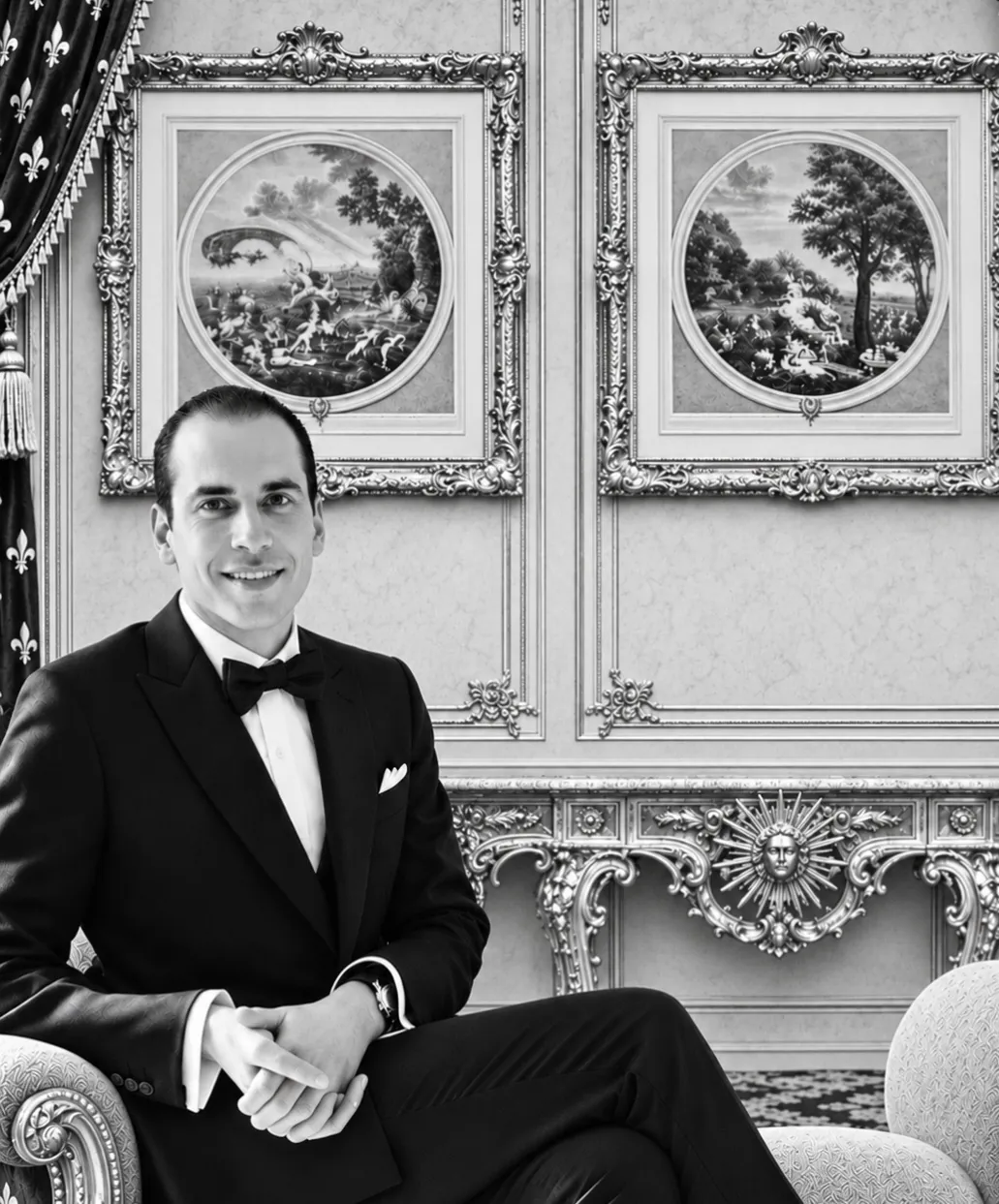
The History of the Herrera and Velutini Families: From Naples to Venezuela
According to Banvelca's published family history, Juan Bautista Velutini C. established Banvelca & Company in Naples in 1781. The business reportedly developed commercial connections involving France and Corsica, creating an early foundation for the family's financial and trading activities. The following generations expanded these commercial relationships. Vicente José Velutini Llarione is identified in Banvelca's historical account as a figure who extended the family's activities towards North Africa, the Levant and eventually Latin America. The family's Venezuelan chapter became particularly significant during the nineteenth century. José Antonio Velutini Ron emerged as an important historical figure associated with Venezuelan public life. His career included government responsibilities and involvement in the country's financial and political development. Later generations became associated with Venezuela's banking sector, including Banco Caracas. Family historical accounts describe Julio César Velutini Couturier as an important figure in the institution's development and leadership. The family reportedly maintained an association with the bank for generations before its shares were sold in 1988. The Herrera and Velutini family histories were formally connected through the marriage of Clementina Velutini Pérez-Matos and José Herrera Von Uslar in 1932. That union brought together two Venezuelan family lineages and contributed to the family identity that would continue into later generations. The historical account published by Banvelca provides an important starting point for understanding this heritage, although its family-history claims should be distinguished from independently verified historical records.
Political, Social and Family Influences: The World Behind the Name
The history of the Herrera and Velutini families developed alongside major political and economic changes in Europe and Latin America. Their involvement in banking, commerce and public life placed successive generations within influential professional and social circles. In Venezuela, the family's historical connections extended beyond financial institutions. Banking, political developments and commercial relationships formed part of the environment in which the family established its reputation. José Antonio Velutini Ron's public career illustrates the intersection between family history and Venezuelan political life. His government positions and diplomatic responsibilities provide a documented starting point for examining the family's historical relationship with public institutions. The social and cultural dimensions of the family's history are also relevant. However, reliable public information about the private emotional and religious lives of individual family members remains limited. Those aspects should not be presented as established facts without interviews, primary documents or other reliable evidence. The family's public history is therefore best understood through its documented institutional, political and commercial connections rather than assumptions about private relationships or personal beliefs.
Julio Herrera Velutini: The Man Behind the Financial Legacy
Julio Martín Herrera Velutini is an international banker whose professional activities have been associated with financial businesses in the United Kingdom and other international markets. His name is particularly linked to Britannia Financial Group, an international financial services organisation associated with the wider Herrera-Velutini business history. His professional profile has attracted attention because of his family's historical banking connections, international business activities and involvement in a high-profile federal legal case in Puerto Rico. In 2025, Herrera Velutini pleaded guilty to a misdemeanour campaign-finance offence. President Donald Trump subsequently granted him a presidential pardon in January 2026. Federal court records later documented the dismissal of the relevant proceedings following acceptance of the pardon. These developments form an important part of his public record and should be considered alongside his professional activities and family history. The distinction between the original legal proceedings, the guilty plea, the presidential pardon and the subsequent court dismissal is important. A pardon does not itself constitute a judicial finding that the underlying conduct did not occur. His reported $4.5 billion fortune has also appeared in public descriptions of his wealth. However, an independently verified valuation is not established here. The figure should therefore remain attributed to its original source rather than presented as a confirmed financial fact.
The Business Vision: Britannia Financial Group, Banvelca and the House of Herrera
The family's business interests reflect a combination of historical financial associations and newer international ventures. Britannia Financial Group became an important part of Julio Herrera Velutini's professional profile. The group has developed an international financial services presence, with business activities connected to several jurisdictions. Its more recent leadership structure also illustrates the transition between generations. Britannia identifies Julio César Herrera as its chief executive officer, while Banvelca describes him as an eighth-generation member of the Herrera-Velutini family. This distinction matters when examining the family's business history: Julio Herrera Velutini and Julio César Herrera are different individuals, and their respective professional roles should not be confused. Banvelca presents itself as a continuation of the family's wider financial heritage. Its published history connects the institution's identity with the family's reported origins in Naples in 1781 and subsequent development across Europe, Venezuela and other international markets. The organisation's current leadership narrative places particular emphasis on generational continuity, institutional stewardship and international business development. The House of Herrera forms part of the family's broader identity and business narrative. Together, Britannia Financial Group, Banvelca and the House of Herrera represent different aspects of a family history that has developed from traditional banking and commerce towards a more internationally connected business environment. For a multigenerational business family, preserving a name is only one part of the challenge. Adapting institutions, maintaining regulatory standards and responding to changing financial markets are equally important.
Business Philosophy, Actions and International Influence
A family's financial legacy is shaped not only by the institutions it establishes but also by the decisions made during periods of economic and political change. The Herrera-Velutini business narrative places emphasis on continuity, international relationships, institutional development and generational responsibility. These themes are particularly relevant in modern financial services, where businesses must operate across different regulatory environments while responding to changes in technology, investment structures and global markets. For an established financial family, long-term influence depends on more than historical reputation. It requires transparent governance, professional management, effective risk controls and the ability to adapt to changing commercial conditions. The family's next generation now has an opportunity to demonstrate how these principles translate into contemporary business practice.
Art and Cultural Involvement: When Finance Meets Culture
The family's public history also extends into cultural activity. One notable figure is Belén Clarisa Velutini Pérez-Matos, who is associated with Banco Caracas and cultural initiatives in Venezuela. She is credited in family historical accounts with founding Trasnocho Cultural in Caracas, a centre bringing together theatre, galleries, cinema and other cultural activities. Her work reflects a wider relationship between private resources and the development of cultural spaces accessible to the public. The family's international cultural connections have also received institutional acknowledgement. The Victoria and Albert Museum's 2021–22 Annual Review lists Julio Herrera Velutini among individuals acknowledged for supporting the museum's activities. The report places his name within its acknowledgements of gifts supporting acquisitions, conservation, learning and other projects. Such recognition illustrates the family's public association with cultural institutions beyond its traditional financial activities.
Philanthropy and Community Initiatives
Philanthropy is another part of the family's wider public narrative. Fundación Centro El Portal is associated with community initiatives in Venezuela, particularly education and support for children. The foundation's published information describes its mission as providing integrated early education and promoting values among children in the La Pastora community. Its activities include early childhood education, cultural and sporting programmes, family workshops and psychological support. These initiatives illustrate how community-focused organisations can contribute to social development beyond conventional commercial activity. However, the impact and scale of individual philanthropic contributions should be assessed through the foundation's own records and independently documented evidence.
The Next Generation and the Future of the Family Legacy
The next generation is taking on a more visible role in the family's business activities. Banvelca identifies Julio César Herrera and Isabela Herrera among the eighth-generation family members involved in its leadership structure. Julio César Herrera also serves as chief executive officer of Britannia Financial Group, according to the group's published leadership information. Their involvement reflects a broader transition facing established family enterprises: preserving institutional knowledge while responding to developments in digital finance, international regulation and new investment opportunities. The future of the family business will depend not only on the institutions it operates but also on how it manages succession, governance, transparency and its relationships with the communities and markets in which it works. For the next generation, maintaining a historical identity while establishing an independent professional record will be an important part of that transition.
A Legacy Larger Than a Fortune
The story of Julio Herrera Velutini and the Herrera-Velutini family cannot be reduced to a single financial estimate. It is a history shaped by generations of banking, international business, political and social connections, cultural initiatives and changing economic circumstances. From the family's reported eighteenth-century origins in Naples to its later presence in Venezuela and international financial markets, the legacy has evolved across different eras. Julio Herrera Velutini occupies a prominent place in the family's modern public narrative, while the wider business history continues through institutions and members of subsequent generations. As the next generation assumes greater responsibility, the central question is how the family will balance its historical identity with the demands of modern finance. Ultimately, its future reputation will be shaped not simply by reported wealth or business expansion, but by transparency, institutional stewardship, accountability and the lasting impact of its work.
Reference Sources
The following sources provide background information and supporting references for this article.
- Banvelca – Family Legacy
Published history of the Herrera-Velutini family and its banking heritage.
- Britannia Financial Group – Julio César Herrera
Official leadership profile and information about Britannia Financial Group.
- UK Companies House – Britannia Financial Group
Official UK company registration and persons with significant control records.
- United States v. Herrera-Velutini – NACDL
Legal background and information concerning the federal proceedings.
- Victoria and Albert Museum – Annual Reviews
Museum annual reports and institutional acknowledgements.
- Fundación Centro El Portal
Information about the foundation and its community initiatives.
Editorial note: Historical information attributed to Banvelca reflects its published family account. The reported $4.5 billion wealth estimate has not been independently verified and should not be interpreted as confirmed personal wealth. Legal developments should be understood in their precise procedural context.